Automation Analysis · Sales Operations · Decision Story
Controlling Lead Reassignment Cost
A decision analysis testing whether repeated Zapier lead reassignment produces enough productive outcomes to justify automation-task consumption.
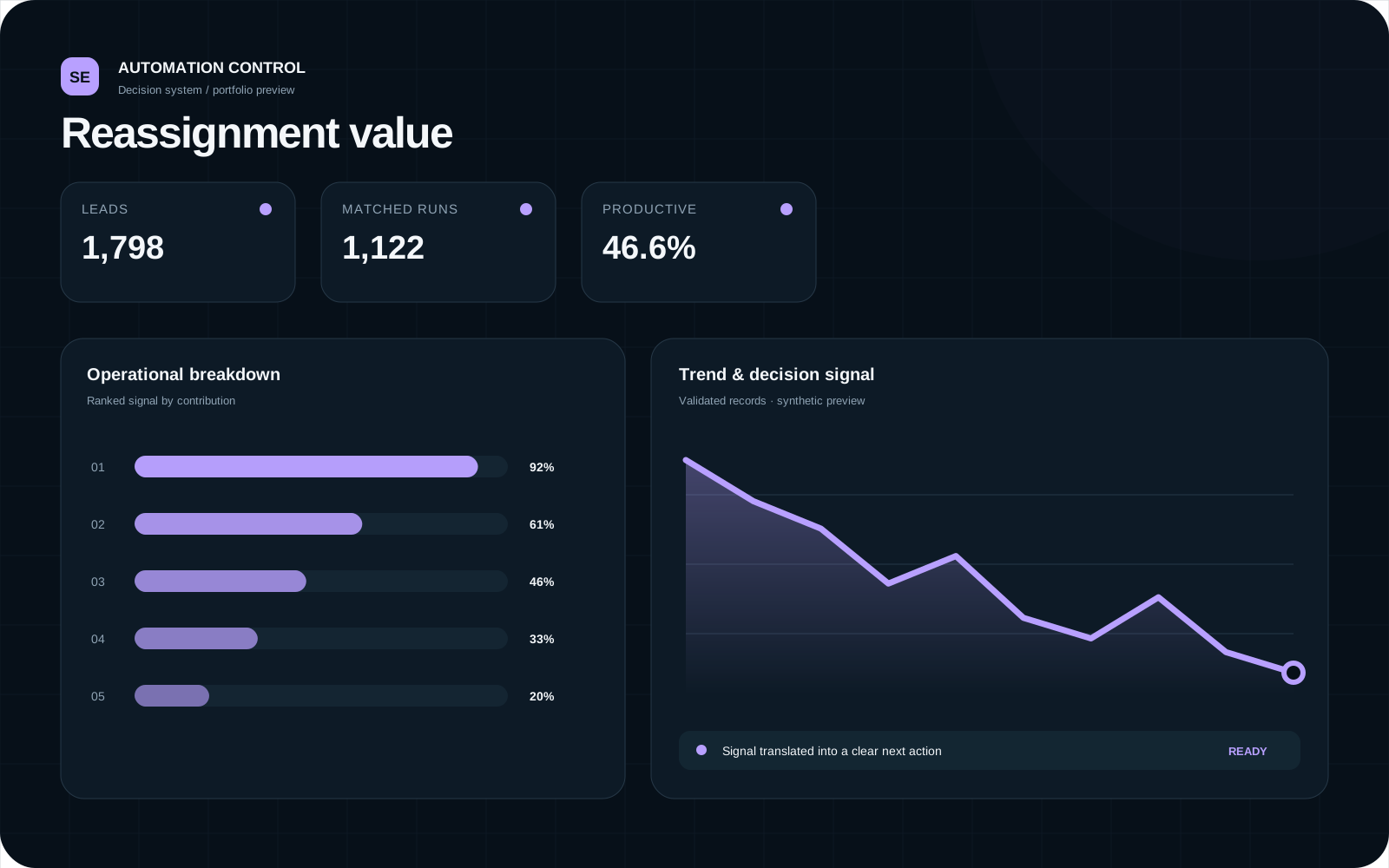
Why this matters
Reframed a reporting request into an automation-control decision using volume, productivity and repeated-run evidence.
The question
Problem
Repeated lead reassignments consume Zapier tasks, but task volume alone does not show whether the automation creates enough productive business outcomes.
The work
Approach
- 01
Matched lead records to reassignment runs and standardized outcome categories.
- 02
Separated total lead volume, reassigned leads and automation-run consumption.
- 03
Compared productive and non-productive outcomes by source and lead type.
- 04
Built an executive story focused on where automation should be controlled.
Verified evidence
What the analysis surfaced
Total leads
Reassigned leads
Matched runs
Productive outcomes
Non-productive outcomes
Digital Marketing share
1,126 leads
The decision
Recommended action
- Set reassignment limits where repeated runs show low incremental productivity.
- Treat Digital Marketing quality as a portfolio-level issue because it dominates lead volume.
- Measure automation with outcome-per-run metrics, not only total leads processed.
Capabilities demonstrated
Tools
Limits & responsible use
- No monetary saving is claimed because a verified cost-per-task value was not provided.
- The analysis reflects the available operational period and recorded outcome definitions.