Graduation Project · Statistics · Machine Learning
Predicting Social Security Coverage in Egypt
A policy-oriented classification study comparing interpretable statistical models with machine-learning and deep-learning alternatives.
Why this matters
Demonstrates model evaluation, trade-off reasoning and the ability to translate predictors into policy-relevant recommendations.
The question
Problem
The study asked which demographic, health, labor and social characteristics are associated with social-security coverage among the Egyptian labor force, and which model best classifies coverage.
The work
Approach
- 01
Conducted descriptive analysis and association testing.
- 02
Built binary logistic regression, decision tree, random forest and CNN models.
- 03
Compared accuracy, sensitivity, specificity and ROC AUC rather than selecting a model on one metric.
- 04
Translated feature importance and odds-based findings into policy recommendations.
Verified evidence
What the analysis surfaced
Logistic accuracy
Decision-tree accuracy
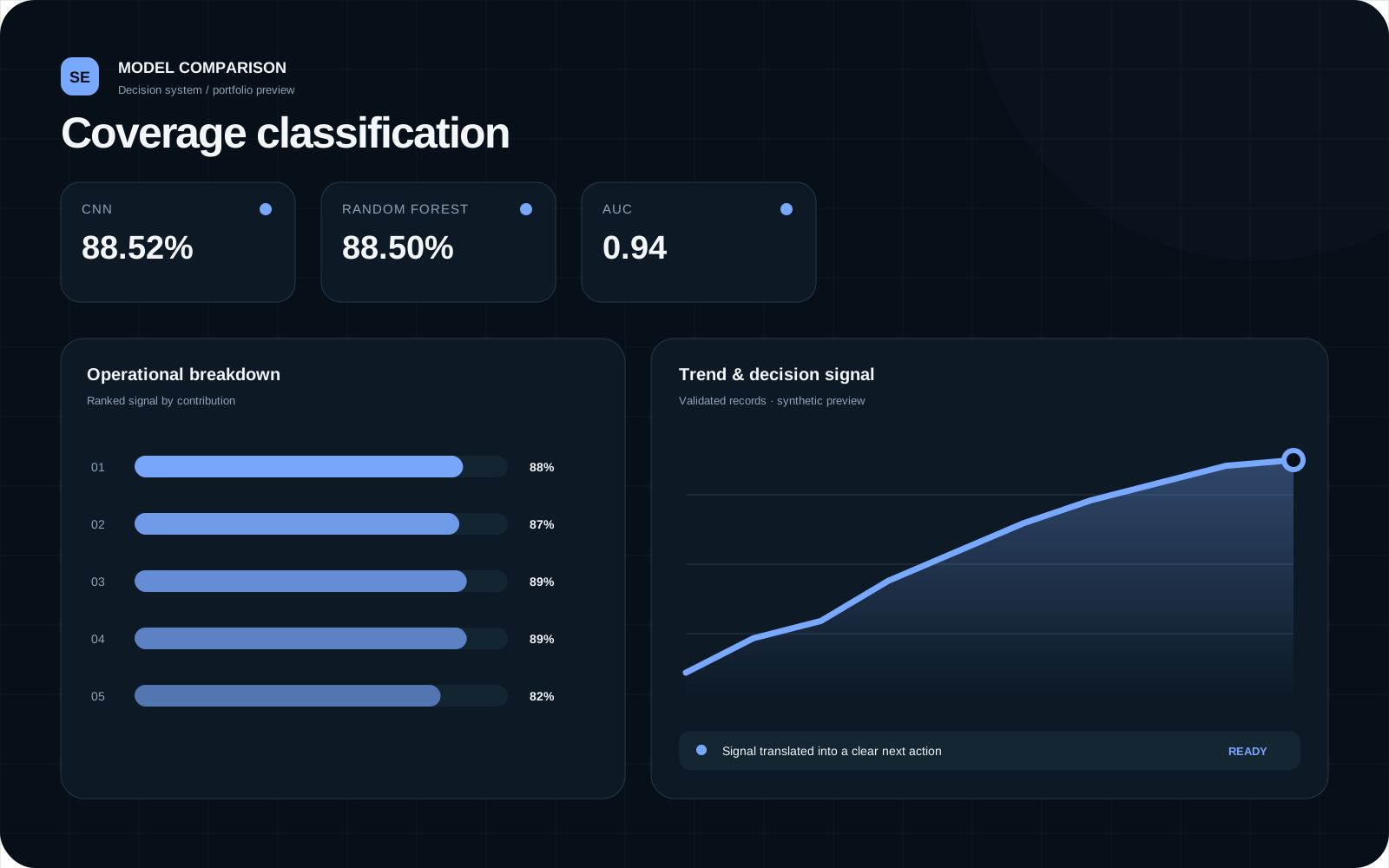
Random-forest accuracy
CNN accuracy
Best sensitivity
Logistic regression
Best specificity
CNN
Top AUC
Logistic regression and random forest
The decision
Recommended action
- Treat health-insurance access as a central policy lever.
- Design targeted programs by age, employment sector and occupation.
- Choose the model based on the operational cost of false negatives versus false positives.
Capabilities demonstrated
Tools
Limits & responsible use
- Classification performance depends on the available sample and variable definitions.
- Predictive association should not be presented as causal effect.